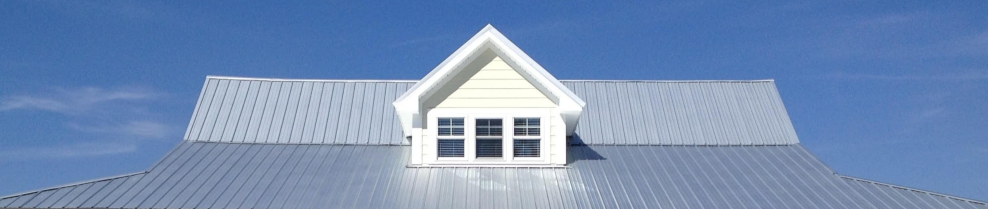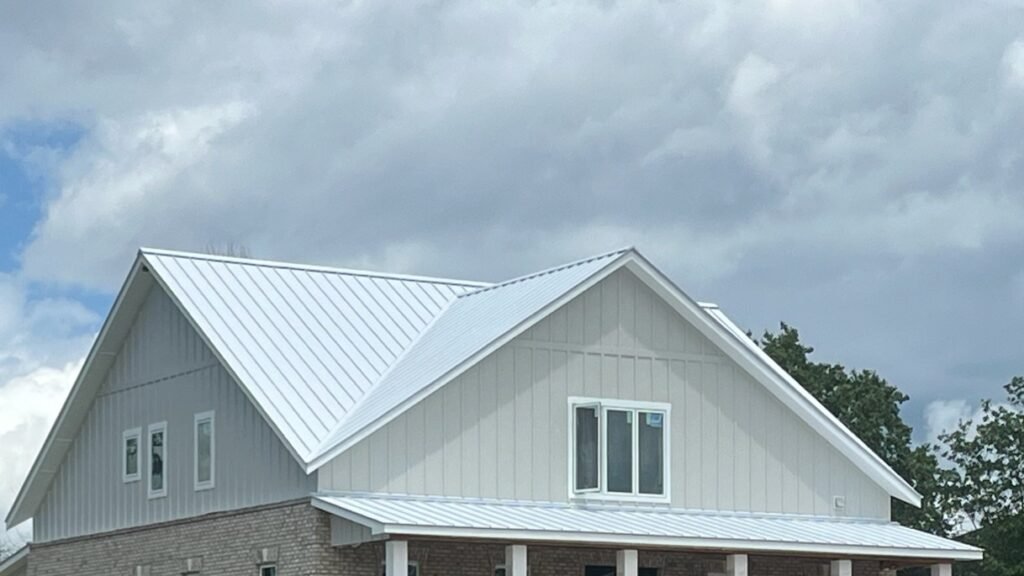
Making a house energy-efficient doesn’t just mean doing one thing and calling it a day. Energy-efficiency is created by many things all working together, many of them not easily visible. Today, we’re going to look into one of the easier to spot energy-efficient features—a metal roof. Buildgreen Industries uses metal roofs because they are durable and reflect UV radiation from sunlight.
We like to use multi-rib mechanically fastened metal roofs because they are cost-effective.
These roofs take about as long to install as a typical shingle roof, though the number of valleys and gables can change how long everything takes. The main difference is that the metal has to be pre-ordered, that way, the pieces of the roof will arrive already cut into the right sizes.
If you look closely at one of these roofs, you’d noticed that it isn’t fully flat. The roof has little ridges, or ribs. These ribs serve an important purpose. The metal of the roof expands and contracts with the heat and the ribs keep the roof from fully buckling.
If you were very close to the roof, you would see little dots running down the metal roof. These are screws holding the roof to the top of the house. We find that mechanically-fastened roofs like this are more cost-effective than other options.
At Buildgreen Industries, we are invested in using durable materials because when a material is long-lasting, it doesn’t need to be replaced as often. These durable materials are therefore more sustainable because you use less of them over time. In this case, a metal roof is at the same basic price point as architectural shingles (as opposed to the lighter standard shingles), but a metal roof will last about three times as long. Shingles will last around twelve years, but a metal roof will last around 25 years.
Like most of what we build, metal roofs can be customized—in this case, you can get them in multiple colors. There are forty standard colors, with additional custom colors available. There are the bolder colors—red, green, blue, etc. Or maybe you would want your roof to compliment the natural colors of your house? In that case, you could select a lighter colored roof, for example, ivory. Ivory is a popular color, along with the nostalgic Galvalume (galvanized metal).
The lighter-colored your roof is, the more reflective it is. And the more reflective a roof is, the more energy-efficient it is. The energy-efficiency of a color is measured by Solar Reflective Index (SRI). An asphalt roof, with its typically darker grey shingles, has a SRI of 0, meaning it absorbs all the heat from the sun. Alternately, a tan metal roof has an SRI of .6, which means that it reflects 60 percent of the heat from the sun, far more than the asphalt shingles.
Between its durability and ability to reflect heat, a metal roof is an important part of making a house energy-efficient. In addition, you can pick the color that most suits your home, keeping in mind that lighter colors help keep your house cooler in our hot and humid South Carolina summers! Also, metal roofs are more resistant to high winds than a shingle roof, which are known to peel and metal roofs are not flammable, unlike flammable asphalt shingles.